
1. Understand What an Electrician Does
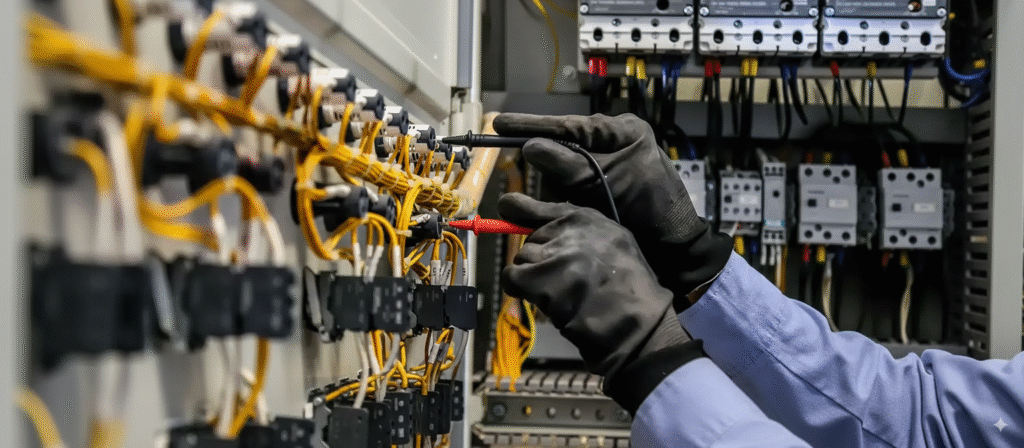
Electricians do much more than just wiring sockets. Typical responsibilities include:
- Installing, maintaining, and repairing electrical systems.
- Reading and interpreting technical drawings and building plans.
- Ensuring compliance with UK wiring regulations (BS 7671).
- Testing and inspecting installations for safety.
This is skilled work that requires both technical knowledge and practical ability.
2. Choose Your Training Route
There are several ways to become an electrician in the UK, depending on your age, background, and learning style:
a) Apprenticeship (Best for School Leavers)
- Work with an employer while studying part-time at college.
- Usually takes 3–4 years.
- Leads to an industry-recognised qualification (such as an NVQ Level 3 in Electrical Installation).
b) College-Based Courses
- Options like City & Guilds 2365 Level 2 and Level 3 Diplomas.
- Good for adults looking to retrain.
- You’ll still need practical work experience later to become fully qualified.
c) Fast-Track Courses (Private Training Providers)
- Intensive courses for career changers.
- More expensive than college routes.
- Still require hands-on experience to register as fully qualified.
3. Gain Work Experience
No matter how much theory you learn, practical experience is essential. Many learners:
- Work with a qualified electrician as a “mate” to gain on-site skills.
- Log practical work towards their NVQ portfolio.
- Learn problem-solving in real-world scenarios.
4. Achieve Key Qualifications
To become a fully qualified electrician, you’ll typically need:
- NVQ Level 3 Diploma in Electrotechnical Systems
- AM2 Assessment (practical skills test)
- 18th Edition Wiring Regulations (BS 7671) certificate
- ECS (Electrotechnical Certification Scheme) Card to prove competence on sites.
5. Decide on a Career Path
Once qualified, electricians in the UK can specialise or go self-employed. Options include:
- Domestic electrician (homes and small properties).
- Commercial/industrial electrician (shops, factories, offices).
- Maintenance technician (ongoing electrical systems care).
- Self-employed contractor (greater independence and earning potential).
6. Keep Up With Regulations
Electrical safety rules and wiring standards are updated regularly. Successful electricians stay up to date through refresher courses, memberships with trade associations (like NICEIC), and ongoing CPD (Continuing Professional Development).
7. Average Salary & Job Outlook
- Newly qualified electricians can earn £23,000–£30,000.
- Experienced electricians or specialists often earn £35,000–£45,000+.
- Self-employed electricians can set their own rates, often higher.
- Demand for electricians in the UK is expected to remain strong, especially with the growth of renewable energy and electric vehicle charging installations.
Final Thoughts
Learning electrician work in the UK is a structured but rewarding journey. Whether you’re leaving school, retraining, or looking for a hands-on career, the pathway is clear: train, get experience, qualify, and keep learning.
Electricians don’t just fix wires – they power the modern world. If you’re practical, safety-minded, and keen to learn, this could be the career for you.